.NET in the Cloud Era: How to Architect, Optimize, and Scale Modern Applications
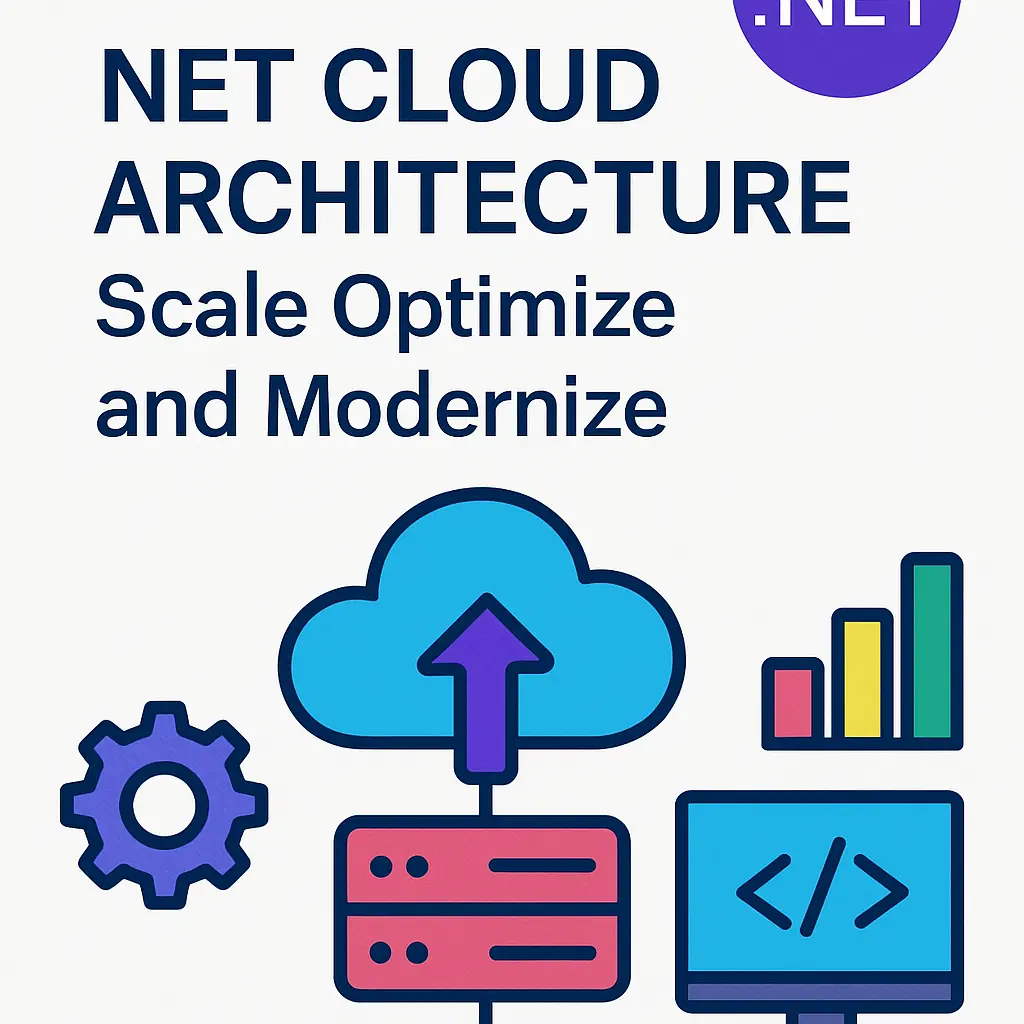
The cloud has transformed how .NET applications are built, deployed, and maintained. Organizations now expect elastic scalability, high availability, and rapid feature delivery as standard. In this article, we will explore how to design robust cloud-native .NET solutions, when it makes sense to hire cloud developers, and how expert net consulting services can dramatically reduce risk and time-to-market.
Cloud-Native .NET Architecture: Core Principles and Decisions
The starting point for a successful .NET cloud strategy is a clear architectural vision. The cloud is not simply another hosting environment; it is a foundation for distributed, event-driven, resilient systems. To use it effectively with .NET, you need to rethink some traditional assumptions about deployments, state management, and application boundaries.
Choosing the right cloud and .NET runtime model
Modern .NET (formerly .NET Core) was built with cloud in mind. Its cross-platform nature and performance optimizations align well with containerization and orchestrators like Kubernetes. When planning your runtime model, consider:
- Infrastructure as a Service (IaaS) – Lifting and shifting existing .NET Framework applications into virtual machines.
- Pros: Minimal code changes; familiar operations model; quick path to the cloud.
- Cons: Limited cloud-native benefits; higher operational overhead; more difficult to scale elastically.
- Platform as a Service (PaaS) – Deploying to services like Azure App Service, AWS Elastic Beanstalk, or similar platforms.
- Pros: Handles OS patching, basic scaling, and monitoring; simplifies deployments; good for web APIs and frontends.
- Cons: Less granular control over environment; vendor-specific features can create lock-in.
- Containers and Kubernetes – Packaging .NET applications in Docker containers and orchestrating them with Kubernetes (AKS, EKS, GKE, etc.).
- Pros: Strong isolation; portability; fine-grained scaling; ideal for microservices.
- Cons: Higher complexity; requires solid DevOps practices and observability tooling.
- Serverless / Functions-as-a-Service – Using Azure Functions, AWS Lambda, or similar platforms for event-driven workloads.
- Pros: Pay-per-use; automatic scaling; great for bursty or highly variable workloads.
- Cons: Cold starts; execution time limitations; more complex local debugging; strong need for observability.
Most real-world systems end up using a combination of these models. For example, a core API might run in containers, scheduled jobs in serverless functions, and legacy components in VMs. The key is to align each workload with the model that best matches its performance, scaling, and operational requirements.
Monolith vs microservices in the cloud
A frequent early decision is whether to migrate a monolith as-is, refactor it into modular components, or invest fully in a microservices architecture.
- Cloud-friendly monoliths – A well-structured monolith deployed in containers or PaaS can still benefit from auto-scaling, blue-green deployments, and centralized logging.
- Suitable when domain complexity is moderate or the team is small.
- Can be incrementally decomposed over time as bottlenecks are identified.
- Modular monoliths – Clear domain boundaries within a single codebase, separated by namespaces, projects, or internal APIs.
- Encourages good domain-driven design (DDD).
- Makes it significantly easier to gradually split modules into independent services later.
- Microservices – Independent, loosely coupled services with their own persistence and deployment pipelines.
- Enables teams to deploy and scale services independently.
- Introduces distributed systems complexity: communication patterns, data consistency, observability, and failure modes.
Blindly adopting microservices often leads to operational overhead without commensurate business value. A pragmatic approach is to start with a modular monolith and split out services once you have strong evidence of scaling or autonomy needs.
Data and state in distributed .NET systems
Cloud applications must be designed with the assumption that instances are ephemeral. This has implications for how you manage data and state:
- Stateless application tiers – Avoid keeping critical state in memory or on local disk. Use distributed caches (e.g., Redis), managed databases, or object storage.
- Database choices – Relational databases (Azure SQL, Amazon RDS for SQL Server, PostgreSQL) remain common for line-of-business .NET applications. NoSQL options (Cosmos DB, DynamoDB, MongoDB) shine for high-scale, flexible-schema scenarios.
- Multi-tenancy strategies – Decide whether tenants share the same database (shared schema), have separate schemas, or separate databases. Each option affects isolation, operational overhead, and cost.
- Event-driven patterns – Use queues and event streams (Azure Service Bus, Event Hubs, AWS SQS, Kafka) to decouple services, buffer load, and build resilient workflows.
Patterns like CQRS (Command Query Responsibility Segregation) and event sourcing can be powerful in high-scale or audit-heavy scenarios, but they also raise the bar for team maturity. The goal is to introduce such patterns only when their benefits clearly outweigh the added complexity.
Security, identity, and compliance in cloud .NET
Security in the cloud is shared between your provider and your team. For .NET applications, some core practices include:
- Centralized identity – Use OpenID Connect and OAuth2 with providers such as Azure AD, IdentityServer, or Auth0. This facilitates single sign-on, MFA, and role-based access control.
- Managed secrets – Store connection strings, keys, and tokens in secure vaults (Azure Key Vault, AWS Secrets Manager) rather than configuration files or environment variables committed to source control.
- Network segmentation – Use virtual networks, private endpoints, and firewalls to limit exposure of databases, caches, and internal APIs.
- Compliance – Map your architecture to regulatory requirements (GDPR, HIPAA, PCI-DSS). Choose managed services that provide audit trails, encryption-at-rest, and in-transit encryption.
Cloud-native security is most effective when considered from the first design iterations. Retrofitting it later is far more costly and error-prone.
Observability and reliability from day one
When applications are decomposed into multiple services and components, traditional logging alone is insufficient. Observability should be baked into your .NET cloud architecture:
- Structured logging using Serilog, NLog, or Microsoft.Extensions.Logging, with correlation IDs propagated across requests.
- Metrics and distributed tracing via Application Insights, OpenTelemetry, Prometheus, or vendor-specific tools.
- Health checks exposed via ASP.NET Core health endpoints, integrated with load balancers and orchestrators.
- Resilience patterns – Retries, circuit breakers, bulkheads, and timeouts implemented through libraries like Polly.
The operational feedback from observability tooling informs scaling decisions, architecture refinements, and performance optimizations, closing the loop between design and production reality.
From Strategy to Execution: Building, Migrating, and Optimizing .NET Cloud Solutions
Once architectural principles are defined, the challenge shifts to execution: migrating existing systems, building new features, organizing teams, and continuously optimizing cost and performance. This is where disciplined engineering and the right expertise become crucial.
Planning a .NET cloud migration roadmap
A thoughtful migration plan avoids big-bang cutovers and unbounded risk. A typical roadmap might involve:
- Discovery and assessment
- Catalog applications, dependencies, and data stores.
- Determine compatibility with modern .NET and identify blockers (legacy libraries, Windows-specific APIs, COM interop).
- Assess performance and availability requirements for each system.
- Prioritization
- Start with applications that are high-value but not mission-critical.
- Target components that will benefit most from elasticity or global reach.
- Migrations patterns
- Rehost – Move \“as-is\” to virtual machines; suitable for short timelines and minimal code changes.
- Refactor – Modify the application to use PaaS, containers, or modern .NET features.
- Re-architect – Redesign into new domains, microservices, or event-driven workflows.
- Replace – Use SaaS or off-the-shelf solutions when building doesn’t create competitive advantage.
- Pilot and expansion
- Run a pilot migration to validate deployment, monitoring, and rollback strategies.
- Use lessons learned to refine the playbook for subsequent migrations.
A well-governed migration effort keeps developers focused on business value while progressively modernizing the technology stack.
Continuous delivery and DevOps for .NET cloud apps
To leverage the cloud fully, your release process must be automated, repeatable, and safe. Core elements of an effective .NET cloud DevOps setup include:
- Source control and branching strategy – Git with trunk-based development or short-lived feature branches helps reduce merge pain and accelerates integration.
- Automated builds – CI pipelines (Azure DevOps, GitHub Actions, GitLab CI, etc.) compile, run tests, and package applications into artifacts or container images.
- Infrastructure as Code (IaC) – Use tools like ARM/Bicep, Terraform, or Pulumi to define cloud infrastructure declaratively and version it alongside the application.
- Automated deployments – CD pipelines perform blue-green or canary deployments, rollbacks, and environment promotions (dev, test, staging, production).
- Quality gates – Integration tests, performance tests, security scanning, and policy checks are enforced before production deployments.
Cloud-native DevOps doesn’t just reduce manual effort; it also provides traceability, compliance, and the confidence to release more frequently without sacrificing stability.
Performance tuning and cost optimization
Cloud platforms make scaling easy, but uncontrolled scaling can become expensive. Performance and cost should be managed together:
- Right-sizing compute
- Use metrics to determine optimal instance sizes and autoscaling thresholds.
- Avoid overprovisioning; use scale-out (horizontal) rather than only scale-up (vertical) where possible.
- Optimizing .NET code
- Identify hotspots with profilers (e.g., dotTrace, PerfView, Application Insights Profiler).
- Optimize database calls, caching strategies, and serialization.
- Leverage async/await and efficient I/O patterns to maximize throughput.
- Storage and database costs
- Tier data based on access frequency; move cold data to cheaper storage.
- Use read replicas and caching to offload primary databases.
- Licensing and managed services
- Evaluate the trade-off between managed services (less operations, higher per-unit cost) and self-managed options (more control, more responsibility).
A disciplined optimization cycle might involve weekly or monthly cost reviews, with engineers using observability data to target high-impact improvements.
When and why to bring in specialized cloud .NET expertise
Even well-resourced internal teams often lack the specific experience required for large-scale or highly regulated cloud .NET initiatives. There are several inflection points where external expertise can be transformative:
- Strategic planning – Early architectural and platform choices can lock in costs and complexity for years. Independent experts can stress-test assumptions and surface alternatives.
- Complex migrations – Re-architecting legacy .NET Framework monoliths with tightly coupled dependencies into cloud-native designs is nontrivial.
- Optimization and remediation – When cloud bills spike, performance degrades under load, or security reviews reveal gaps, you need targeted intervention rather than trial-and-error.
- Capability building – External professionals can mentor your internal team, establish patterns, and leave behind a sustainable delivery model.
Deciding whether to build all expertise in-house or leverage external talent is a classic build-or-buy decision in itself. The optimal mix usually depends on your core business, the urgency of your initiatives, and the state of your current team.
Integrating external .NET cloud teams with your organization
To reap genuine value from outside expertise, integration must be deliberate:
- Define ownership clearly – Decide which components or subsystems external teams own, and where the boundaries with internal teams lie.
- Shared standards – Establish coding standards, branching models, deployment processes, and documentation expectations up front.
- Knowledge transfer – Incorporate pairing, joint design reviews, and internal workshops into project plans so expertise is retained in-house.
- Outcome-based contracts – Frame engagements around outcomes (e.g., successfully migrated service with specific SLOs) rather than only time and materials.
When orchestrated well, external .NET cloud specialists can accelerate delivery while simultaneously raising the skill level of your own engineers.
Conclusion
Designing and operating .NET applications in the cloud demands more than simple hosting changes. It touches architecture, security, data, observability, DevOps, and cost management in integrated ways. By aligning workloads with the right cloud models, modernizing architecture pragmatically, and bringing in focused expertise where needed, organizations can unlock scalability, resilience, and faster innovation while controlling risk and cost. Thoughtful planning today sets the stage for sustainable .NET cloud success tomorrow.