Introduction
In today’s ever-evolving digital landscape, forward-thinking businesses are seeking scalable, agile, and robust solutions to remain competitive. .NET-based microservices and cloud development stand out as powerful approaches for building modern enterprise applications. This article explores how leveraging a microservices development company and securing the expertise to hire cloud developer teams can drive business transformation, enable seamless scalability, and ensure future readiness.
Unpacking .NET Microservices and Cloud-First Development
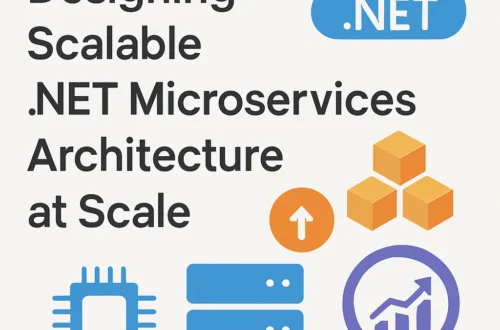
The shift from monolithic application architecture to a microservices-based ecosystem isn’t merely a trend; it’s a strategic maneuver that offers flexibility, maintainability, and resilience. .NET, with its cross-platform capabilities and expansive toolkit, has established itself as a leading framework for microservices design. Organizations can tailor microservices to handle discrete business functions—ranging from user authentication to data analytics—thereby isolating problems, updating services independently, and scaling only the components with growing demand.
Why are microservices crucial in a cloud environment? Microservices naturally complement the elasticity and distributed nature of cloud computing. When deployed in the cloud, these loosely-coupled services can rapidly scale, self-heal, and interact seamlessly across geographies. Gathering a team from a reputable microservices development company provides access to best practices, advanced tooling, and seasoned professionals familiar with the intricacies of distributed systems.
Below are key drivers for adopting .NET microservices and cloud-first solutions:
- Scalability: Rapidly and dynamically provision resources as traffic surges.
- Resilience: Service failures are isolated, minimizing the impact on overall system performance.
- Deployment Velocity: Independent lifecycles allow teams to update and deploy features without downtime.
- Technology Diversity: Use the best-suited tools and languages per service, thanks to .NET Core’s cross-platform support.
- Cloud Optimization: Leverage managed services, containers (like Docker), and orchestrators (like Kubernetes and Azure Kubernetes Service) for cost-efficient deployment.
Embracing microservices in the cloud also dramatically simplifies the adoption of DevOps practices. Automation, CI/CD pipelines, containerization, and infrastructure-as-code become foundational, supporting rapid innovation cycles. Real-time monitoring and centralized logging, essential in distributed environments, are natively supported by platforms like Azure Monitor, AWS CloudWatch, and open-source alternatives.
Another pivotal aspect is security. .NET provides built-in tools for implementing authentication, authorization, and threat detection at the service level, supporting strategies like zero trust security models and comprehensive API management. The microservices paradigm encourages a granular approach to permissions, meaning each microservice enforces its security policies, reducing the surface area for attacks and supporting strong compliance initiatives.
Effectively, a cloud-first approach powered by .NET microservices is instrumental in enabling business models that require agility and responsiveness. For instance, fintech applications benefit from modularization due to regulatory requirements and rapid product innovation. E-commerce platforms leverage microservices for inventory management, recommendations, and payment processing, scaling each independently during seasonal peaks or demand spikes.
Seeking expertise from a professional microservices development company ensures that the architectural foundation is sound, performance bottlenecks are preemptively addressed, and the deployment strategy is tailored to specific business needs. Suitable architecture aligns technology with organizational goals, creating a sustainable edge.
Building the Dream Team: Hiring Cloud-Native .NET Developers
Transitioning to or enhancing microservices and cloud-native architecture is not just a technological upgrade—it’s a cultural and operational shift. This underscores the importance of acquiring the right talent. The ability to hire cloud developer specialists with .NET expertise is a decisive factor in successfully executing a cloud-first microservices strategy.
What sets an effective .NET cloud developer apart?
- Deep Knowledge of .NET Ecosystem: Proficiency in .NET Core, ASP.NET, Entity Framework, and related libraries.
- Mastery of Cloud Platforms: Experience with public, private, or hybrid cloud providers such as Microsoft Azure, AWS, or Google Cloud Platform.
- Containerization and Orchestration: Hands-on experience with Docker, Kubernetes, Helm, and supporting tools.
- Microservices Patterns: Understanding of patterns like API Gateway, Service Registry, Circuit Breaker, Event Sourcing, and Saga.
- DevOps Fluency: Familiarity with CI/CD pipelines, automated testing strategies, infrastructure-as-code (e.g., Terraform, ARM templates), and monitoring suites.
- Security Best Practices: Competency in OAuth2, OpenID Connect, API security, and cloud identity management.
- Collaboration and Communication: Ability to work in agile teams, communicate across business and technology units, and document solutions coherently.
By bringing onboard developers who embody these competencies, enterprises can maximize the efficiency and reliability of their .NET microservices applications in the cloud. Moreover, experienced cloud developers quickly identify optimization opportunities—be it in cost, reliability, or scalability—that go unnoticed in less mature teams.
The Role of Cloud Developers in Project Lifecycle
- Architecture Design: Collaborating with stakeholders to design microservices aligning with business requirements and cloud best practices.
- Implementation: Writing robust, maintainable code with automated testing in mind.
- Deployment: Crafting deployment pipelines, automating rollouts, and ensuring blue/green or canary deployments for minimal risk.
- Maintenance and Monitoring: Proactive performance tuning, real-time monitoring, and applying security patches promptly.
- Continuous Innovation: Keeping up with emerging .NET and cloud technologies, proposing improvements, and fostering a DevSecOps mindset.
Hiring the right .NET cloud developers results in:
- More rapid and predictable time-to-market for services.
- Stable and cost-effective cloud operations.
- Enhanced security and regulatory alignment.
- Long-term viability and simplicity in scaling the product suite.
For many businesses, engaging a development partner to fill skill gaps or supplement internal teams is more productive than hiring full in-house teams, especially for short-term or highly specialized projects. The right cloud development team can embed proven frameworks, automate manual tasks, and introduce best practices—setting up your enterprise for long-term success in the cloud economy.
Finally, fostering a culture of learning and innovation is key. When organizations embrace continuous improvement and equip teams with resources to stay at the technological frontier, they ensure that their cloud-native and microservices investments continue to provide value as market demands evolve.
Conclusion
Adopting .NET-based microservices within a cloud-first strategy empowers enterprises to respond nimbly to market demands, scale seamlessly, and secure their applications. Leveraging the support of a top-tier microservices development company and making the strategic decision to hire cloud developer talent ensures robust architecture, accelerated innovation, and operational excellence. Ultimately, these initiatives position forward-looking businesses for sustainable success and digital transformation in a dynamic world.