The Rise of the Hybrid Development Model
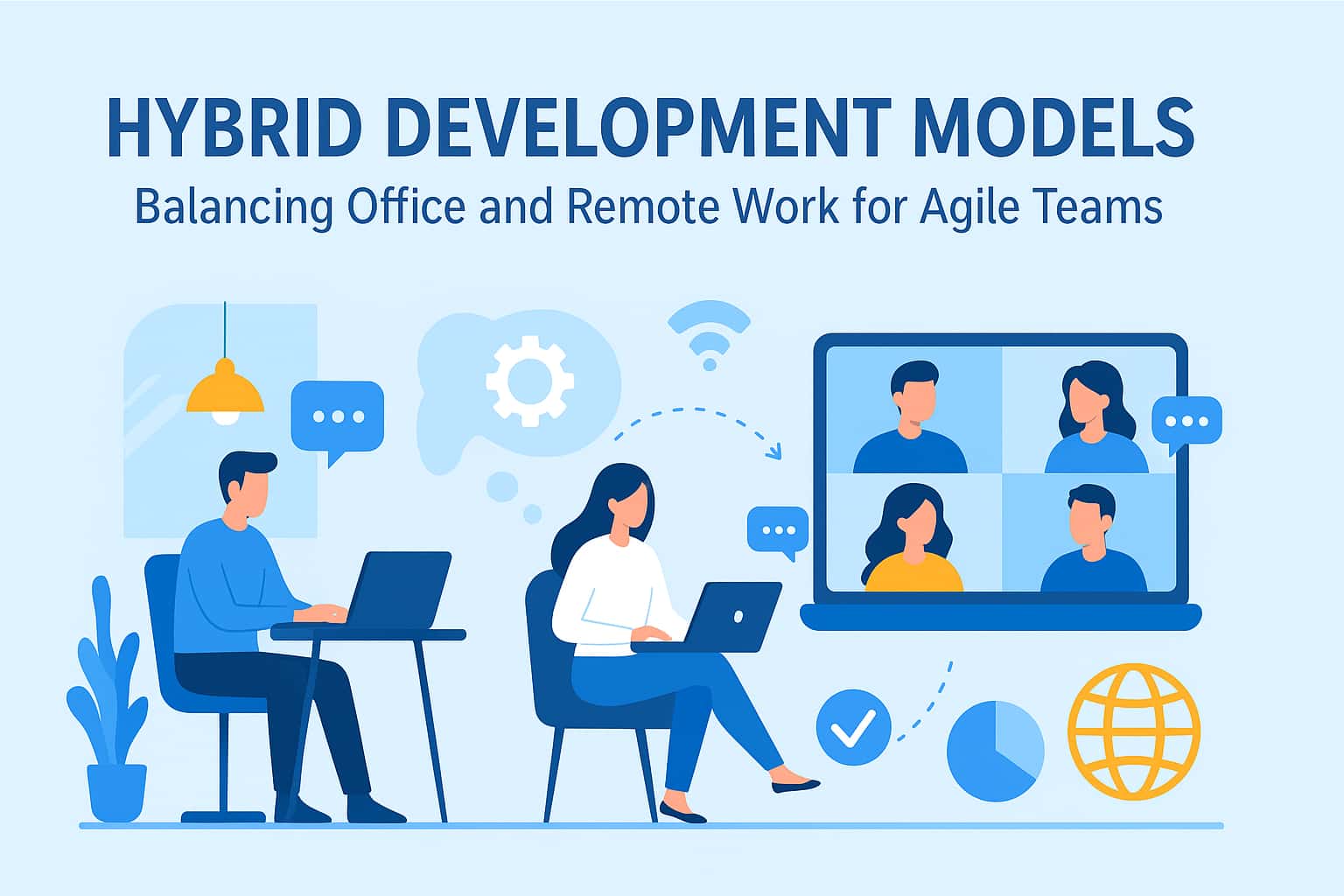
In the modern software industry, flexibility has become the foundation of success. The pandemic accelerated the transition to remote work, forcing companies to rethink how teams collaborate, build, and deliver products. As the world adapts to a new normal, hybrid development models — where teams combine remote and in-office work — are emerging as a sustainable and productive approach to agile software development.
The hybrid model isn’t just about allowing developers to choose where they work; it’s about designing systems, processes, and cultures that optimize collaboration, innovation, and delivery regardless of location. It’s an evolution of agile principles, extending adaptability beyond code into team structure and communication.
Hybrid development teams have unique advantages. They can draw from a global talent pool while maintaining in-person collaboration for brainstorming, design sprints, and problem-solving. At the same time, this model introduces challenges: time-zone coordination, maintaining team cohesion, ensuring consistent communication, and balancing autonomy with accountability.
To thrive in this environment, organizations must focus on intentional design — not just in software, but in culture, leadership, and process. Hybrid development is not a compromise between remote and office work; it’s a new way to unlock productivity, creativity, and engagement across diverse teams.
Building the Foundation for Hybrid Agility
Hybrid work models demand rethinking traditional agile structures. Daily stand-ups, sprint planning, and retrospectives remain essential, but the way they are conducted changes significantly when part of the team is remote. To maintain transparency, distributed teams must rely heavily on digital tools — project management systems, communication platforms, and code collaboration environments that provide real-time visibility into progress.
The first step in building a hybrid development framework is to establish clear asynchronous communication practices. Teams that rely solely on meetings to share updates often create bottlenecks for remote developers. Instead, detailed documentation, transparent workflows, and shared repositories of knowledge ensure that information flows seamlessly.
Hybrid development thrives on autonomy. Developers need the flexibility to manage their own schedules while staying aligned with sprint goals. Clear expectations and measurable outcomes replace micromanagement. Leaders must build trust and empower individuals to deliver results without constant supervision.
At the same time, maintaining a sense of team unity is crucial. Periodic in-person meetups, virtual coffee sessions, and shared goal-setting exercises help reinforce culture. Strong hybrid teams treat physical presence as a strategic advantage, not a default expectation.
Technology plays a central role in this transformation. Cloud-based tools, collaborative coding environments, and secure data access are prerequisites. Whether a company is offering PHP development services or building large-scale enterprise systems, robust infrastructure ensures developers can collaborate efficiently and securely from anywhere.
Leadership and Culture in Hybrid Teams
The success of hybrid development depends as much on leadership as on technology. Managing a hybrid agile team requires empathy, adaptability, and a deep understanding of human motivation. Traditional leadership styles that focus on presence and supervision are ineffective in this environment. Instead, leaders must foster a culture of trust, accountability, and continuous feedback.
Hybrid teams thrive when leaders prioritize outcomes over activity. Success is measured not by hours worked, but by value delivered. Transparent goals, well-defined roles, and open communication channels reduce friction and empower teams to self-organize.
Leaders also play a critical role in bridging the gap between in-office and remote developers. Without deliberate inclusion efforts, remote team members can feel disconnected from decision-making or company culture. Inclusive communication habits — such as ensuring everyone’s input during meetings and recording sessions for those in different time zones — can eliminate the “in-office bias.”
As Steve Jobs once observed, “Great things in business are never done by one person. They’re done by a team of people.” This principle resonates deeply in the hybrid era. It reminds us that collaboration is not about proximity, but about purpose and alignment. When leaders create an environment where developers feel connected and valued, physical boundaries become irrelevant.
Cultural alignment is equally important. A hybrid environment works best when organizations establish shared values that guide decision-making. Whether it’s a commitment to transparency, continuous learning, or customer-centricity, these principles provide a common foundation for distributed teams.
Tools, Processes, and Continuous Improvement
A hybrid development model succeeds when technology supports agile processes. Teams need tools that replicate the serendipity of office collaboration while enhancing remote productivity. Modern software ecosystems offer countless platforms for project tracking, code review, testing, and communication. The challenge lies in integrating them effectively.
Continuous integration (CI) and continuous deployment (CD) pipelines are essential for maintaining velocity and quality. They allow hybrid teams to automate testing, streamline releases, and ensure consistency regardless of location. This automation minimizes manual errors and enables developers to focus on innovation rather than repetitive tasks.
Version control systems like Git, paired with platforms such as GitHub or GitLab, provide the transparency and traceability needed for distributed coding. Developers can collaborate asynchronously, review pull requests, and resolve issues without requiring overlapping schedules.
Knowledge sharing is another pillar of hybrid development. Internal wikis, shared documentation hubs, and design systems help teams maintain alignment even as members come and go. These repositories preserve institutional knowledge and reduce the dependency on verbal communication.
Another critical aspect of hybrid agility is Application support and maintenance services. Once a product is live, distributed teams must ensure its stability and performance. Remote engineers can monitor, update, and optimize applications around the clock, reducing downtime and improving customer satisfaction. This continuity of service reinforces the business value of hybrid teams by combining flexibility with reliability.
Feedback loops are the lifeblood of agile development. In hybrid teams, they extend beyond product iterations — they apply to team processes, communication patterns, and leadership practices. Regular retrospectives and anonymous feedback channels help organizations continuously refine their hybrid strategy.
The Future of Hybrid Development: Flexibility as a Superpower
The hybrid model represents a fundamental shift in how software is built and delivered. It merges the best aspects of remote work — autonomy, inclusivity, and access to global talent — with the benefits of in-person collaboration — creativity, alignment, and team bonding.
As technology evolves, hybrid development will become even more seamless. Advancements in virtual reality (VR) and augmented reality (AR) collaboration tools will further blur the line between physical and digital workplaces. AI-driven project management platforms will automate coordination, predicting bottlenecks and optimizing workflows.
But technology alone won’t define the success of hybrid development — people will. The organizations that succeed will be those that see hybrid not as a temporary experiment but as a long-term strategic advantage. They will invest in culture, training, and leadership development as much as they invest in tools.
Hybrid development models also open new opportunities for inclusivity. By decoupling work from location, companies can tap into diverse talent pools, including individuals who previously faced barriers due to geography or accessibility. This diversity strengthens innovation and broadens perspective, leading to more resilient and creative solutions.
For agile teams, the hybrid model is not a constraint — it’s a catalyst. It forces organizations to become more intentional about collaboration, clearer in communication, and more adaptive in their processes. The result is not just better software but better teams — teams that can thrive in uncertainty, evolve with change, and build products that reflect the connected, flexible world we live in.