The financial technology and banking sectors are among the most demanding areas of the IT industry. Applications must process vast volumes of transactions in real time, comply with strict regulatory frameworks, protect sensitive data, and remain available around the clock. As digital transformation accelerates, banks and FinTech companies increasingly rely on robust, flexible, and secure technology stacks to stay competitive. One of the platforms that has consistently proven its value in this environment is Microsoft .NET.
Custom .NET solutions power everything from core banking systems and payment gateways to mobile banking apps, trading platforms, and risk management tools. This article explores why .NET is so well suited for FinTech and banking, how custom development adds strategic value, and what businesses should consider when building or modernizing financial software.
Why .NET Is a Strong Foundation for FinTech and Banking
Financial software is fundamentally different from applications in many other industries. Performance, reliability, and security are not optional features; they are baseline requirements. The .NET ecosystem was designed with enterprise-grade needs in mind, which aligns closely with the realities of banking and FinTech.
One of the key advantages of .NET is its stability. The platform has matured over decades, evolving without breaking backward compatibility for critical systems. This makes it particularly attractive for banks that operate long-lived applications and cannot afford frequent disruptive rewrites. At the same time, modern .NET versions support cloud-native development, microservices, and containerization, enabling innovation without sacrificing reliability.
Security is another cornerstone. The .NET framework includes built-in mechanisms for authentication, authorization, encryption, and secure data handling. These capabilities help development teams implement industry standards such as PCI DSS, GDPR, and regional financial regulations more efficiently. Combined with Microsoft’s ongoing security updates and long-term support policies, .NET provides a dependable base for protecting sensitive financial data.
Performance and scalability also play a decisive role. Financial systems often experience peak loads during specific hours, market events, or promotional campaigns. .NET applications are optimized for high throughput and low latency, whether deployed on-premises or in the cloud. With proper architecture, they can scale horizontally to handle millions of transactions without degradation in user experience.
Finally, .NET integrates seamlessly with other Microsoft technologies widely used in finance, such as SQL Server, Azure, Active Directory, and Power BI. This ecosystem approach simplifies development, maintenance, and analytics across complex IT landscapes.
Custom Development for Complex Financial Requirements
Off-the-shelf software can address basic needs, but FinTech and banking organizations often face highly specific challenges that require tailored solutions. Custom development allows businesses to align technology precisely with their processes, compliance obligations, and strategic goals.
In banking, core systems must reflect unique product portfolios, customer segmentation models, and internal workflows. Custom .NET applications can be designed to support proprietary lending algorithms, risk assessment models, or customer onboarding processes. This flexibility enables institutions to differentiate themselves in competitive markets rather than conforming to generic software limitations.
For FinTech startups, custom solutions are often the foundation of the entire business model. Whether it is a digital wallet, a peer-to-peer payment platform, or an automated investment service, the application itself is the product. Building it on .NET allows teams to rapidly prototype, test, and iterate while maintaining a solid architectural backbone capable of supporting future growth.
Another critical aspect is integration. Financial ecosystems are rarely isolated; they connect to payment processors, credit bureaus, regulatory reporting systems, and third-party APIs. Custom .NET solutions can be architected as integration hubs, ensuring secure and reliable data exchange between internal and external systems. This is particularly important as open banking initiatives and API-driven finance continue to expand globally.
Customization also extends to user experience. Corporate clients, retail customers, and internal staff all have different expectations and workflows. With ASP.NET and related technologies, development teams can create tailored interfaces for web and mobile platforms that balance usability with strict security requirements.
Security, Compliance, and Risk Management
Few industries face the level of regulatory scrutiny that banking and FinTech do. Compliance is not a one-time effort but an ongoing process that must adapt to changing laws, standards, and threats. Custom software development plays a crucial role in embedding compliance directly into system architecture.
.NET provides a strong foundation for implementing layered security models. Developers can enforce role-based access control, multi-factor authentication, and fine-grained authorization rules across applications. Sensitive operations can be isolated into secure services, reducing the attack surface and limiting potential damage from breaches.
Data protection is another area where .NET excels. Built-in cryptographic libraries support secure data storage and transmission, helping organizations meet encryption requirements for data at rest and in transit. Audit logging and monitoring capabilities can be integrated at the application level, enabling detailed tracking of user actions and system events for compliance reporting.
Risk management is not only about external threats but also operational resilience. Financial systems must remain available even during hardware failures, cyberattacks, or unexpected traffic spikes. Custom .NET solutions can be designed with redundancy, failover mechanisms, and disaster recovery strategies that align with regulatory expectations for business continuity.
In many cases, organizations turn to .NET consultancy to assess existing systems, identify security gaps, and design architectures that meet both current and anticipated regulatory demands. This strategic guidance helps reduce long-term risk and ensures that development efforts support compliance rather than react to it.
Cloud, Microservices, and Modern Architecture in Finance
The shift toward cloud computing has significantly influenced how financial software is built and deployed. While banks were initially cautious about cloud adoption, concerns around security and compliance have gradually been addressed through improved platforms and regulatory clarity. Today, many financial institutions use hybrid or multi-cloud strategies to balance control with scalability.
.NET is particularly well suited for this transition. Modern .NET applications can be deployed in containerized environments, orchestrated with Kubernetes, and hosted on cloud platforms such as Microsoft Azure. This enables financial organizations to scale resources dynamically, optimize infrastructure costs, and accelerate deployment cycles.
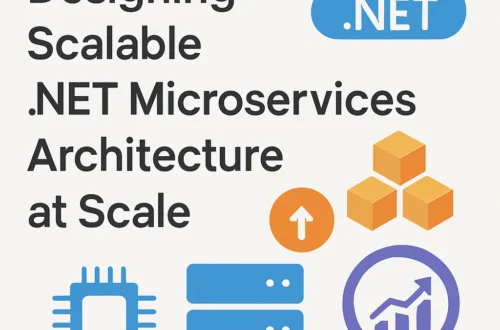
Microservices architecture has become increasingly popular in FinTech and banking because it allows teams to develop, deploy, and update components independently. For example, payment processing, user authentication, and reporting services can evolve separately without disrupting the entire system. .NET supports this approach through lightweight APIs, messaging frameworks, and service discovery mechanisms.
Cloud-native .NET applications also enhance resilience. Services can be distributed across regions, reducing the impact of localized outages. Automated monitoring and logging tools provide real-time visibility into system health, helping teams respond quickly to issues before they affect customers.
For legacy banks, modernization often involves gradually refactoring monolithic applications into modular services. This approach minimizes risk while unlocking the benefits of cloud scalability and faster innovation. Custom development ensures that this transformation aligns with regulatory requirements and existing business processes.
Long-Term Value of Custom .NET Solutions in Finance
Investing in custom software is a strategic decision that extends far beyond initial development costs. For FinTech companies and banks alike, the long-term value lies in adaptability, ownership, and alignment with business objectives.
Custom .NET solutions evolve alongside the organization. As regulations change, new financial products are introduced, or customer expectations shift, the software can be adjusted without waiting for vendor updates or negotiating licensing constraints. This agility is especially important in FinTech, where speed to market can determine success or failure.
Ownership of the codebase also provides transparency and control. Financial institutions can conduct independent security audits, integrate new technologies, or onboard new development partners without being locked into proprietary platforms. Over time, this reduces operational risk and dependency on third parties.
Another often overlooked benefit is talent availability. The global .NET developer community is large and experienced, making it easier to build or expand internal teams. This ensures continuity and reduces knowledge loss compared to niche or proprietary technologies.
Finally, custom solutions support innovation. Advanced analytics, AI-driven risk assessment, real-time fraud detection, and personalized financial services all require flexible architectures capable of integrating new components. .NET’s extensibility and compatibility with modern tools make it a strong enabler of these innovations.
Conclusion
Custom .NET development services play a critical role in shaping the future of FinTech and banking solutions. The platform’s stability, security, and scalability make it a natural fit for financial systems that must operate reliably under constant regulatory and performance pressure. By choosing custom development over generic solutions, organizations gain the flexibility to meet complex requirements, integrate seamlessly with evolving ecosystems, and maintain full control over their technology stack.
As digital finance continues to expand, the ability to adapt quickly while maintaining trust and compliance will define market leaders. Well-architected .NET solutions provide a solid foundation for this journey, supporting both innovation and long-term resilience in an increasingly competitive financial landscape.